


Page 8 - reflections_dyslipidaemia_newsletter9_Final
P. 8
REFLECTIONS
                                                                                                                   Dyslipidaemia
     Dyslipidaemia Global Newsletter #9 2025


     To investigate this, the authors conducted an observational study using prospectively collected data from four Swedish national
     registries, primarily the SWEDEHEART registry, which captures over 90% of MI patients under 80 years old in Sweden. The authors
     also used the Prescribed Drug Registry, the National Patient Registry, and the Cause of Death Registry. Included in the study were
                                                                                                                   Dyslipidaemia
     35,826 patients aged 18 to <80 with an MI diagnosis from January 2015 to September 2022. Patients were categorised into three
     groups based on ezetimibe initiation: early (within 12 weeks of discharge, reference group), late (13 weeks to 16 months after
     discharge), or no ezetimibe during the first 16 months after discharge. The primary outcome was MACE, consisting of all-cause
     death, non-fatal MI, and non-fatal stroke. Secondary outcomes included cardiovascular death, individual components of MACE, and
     LDL-C target achievement.


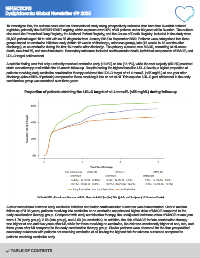
     A notable finding was that only a minority received ezetimibe early (16.9%) or late (18.1%), while the vast majority (65.0%) received
     statin monotherapy at all within the 16-month follow-up. Despite having the highest baseline LDL-C levels, a higher proportion of
     patients receiving early ezetimibe combination therapy achieved the LDL-C target of <1.4 mmol/L (<55 mg/dL) at one year after
     discharge (about 55% of patients) compared to those receiving it late or not at all. This superior LDL-C goal attainment in the early
     combination group was sustained over three years.


                Proportion of patients attaining the LDL-C target of <1.4 mmol/L (<55 mg/dL) during follow-up


                       Patients with at least one measure of LDL-C are included (varying time points and frequency of measurements).

     A clear association between early ezetimibe initiation and better cardiovascular outcomes was demonstrated. Over a median
     follow-up of 3.96 years, patients receiving late ezetimibe or no ezetimibe experienced higher risks of MACE compared to the
     early combination therapy group. Compared with early combination therapy, the unadjusted incidence rates of MACE at one year
     were 1.79 (early group), 2.58 (late group), and 4.03 (no ezetimibe). In addition, the risk of MACE for late combination therapy
     was higher at one and two years after MI, while for those receiving no ezetimibe, the risk was consistently higher at one, two, and
     three years after MI compared to the early combination therapy group. Similar patterns were observed for the four prespecified
     secondary outcomes with patients not receiving ezetimibe at all having the highest risk for adverse outcomes compared to
     patients receiving ezetimibe early.


          TABLE OF CONTENTS

