


Page 4 - reflections_dyslipidaemia_newsletter9_Final
P. 4
REFLECTIONS
                                                                                                                   Dyslipidaemia
     Dyslipidaemia Global Newsletter #9 2025


     SMDs are defined here as a cluster of metabolic abnormalities affecting multiple organs, leading to increased morbidity and mortality
     from both cardiovascular and non-cardiovascular causes. While SMD has a heterogeneous etiology, the most common determinant
     is a maintained positive energy balance, essentially an energy intake that is too large in relation to one’s real needs, primarily
                                                                                                                   Dyslipidaemia
     resulting in high-risk forms of obesity. This leads to excessive lipid accumulation in adipocytes as subcutaneous adipose tissue or
     as visceral adipose tissue up to an individual’s predetermined threshold, after which SMD manifests. This progression promotes
     comorbidities such as insulin resistance, hypertension, and atherogenic dyslipidaemia. Genetic factors significantly influence SMD
     susceptibility, with heritability estimates for its components ranging from 40% to 70%. Ethnic disparities in SMD are also noted,
     attributable to both genetic and socioeconomic factors.

                                   Definition of each stage of systemic metabolic disorder

                      Defined as the presence of (i) insulin resistance/prediabetes alone or (ii) overweight/dysfunctional adiposity
        Stage 1
                      and at least one of the following traits: isolated liver steatosis, hypertension, or atherogenic dyslipidaemia


                      Defined as Type 2 diabetes, asymptomatic diastolic dysfunction, MASH/fibrosis, albuminuria or CKD
        Stage 2
                      Categories 1-2, or sub-clinical atherosclerosis with no history of events

        Stage 3        Defined as symptomatic HF pEF, cirrhosis/liver failure, reduced kidney function/failure and CKD Categories
                       3-5, or clinical manifestation of ASCVD

     ASCVD, atherosclerotic cardiovascular disease; CKD, chronic kidney disease; HFpEF, heart failure with preserved ejection fraction; MASH, metabolic-associated
     steatohepatitis.

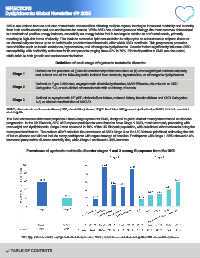
     The EAS consensus statement proposes a three-stage system for SMD, designed to guide clinical management based on disease
     progression. In the UK Biobank, 58% of European participants were found to have Stage 1 SMD, most commonly presenting with
     overweight and dyslipidaemia. Stage 2 was observed in 19% of the UK Biobank population, with subclinical atherosclerosis being the
     most prevalent feature. The authors didn’t calculate the prevalence of SMD Stage 3 as the UK Biobank prioritised estimating the risk
     of future disease and did not include many participants with organ damage at baseline. Participants with Stage 1 SMD showed a 6%
     increased prospective all-cause mortality risk, while Stage 2 conferred a 49% increase.


                 Prevalence of systemic metabolic disorder stages 1 and 2 among Europeans from the UKB


              T2D, Type 2 diabetes; ADD, asymptomatic diastolic dysfunction; MASH, metabolic-associated steatohepatitis; CKD, chronic kidney disease.


          TABLE OF CONTENTS

